
2026-07-17 · X
The Oil Market’s Asymmetric Setup
China’s buffers, US SPR mechanics, and refiner strength
Published on X, 17 July 2026. Original post.
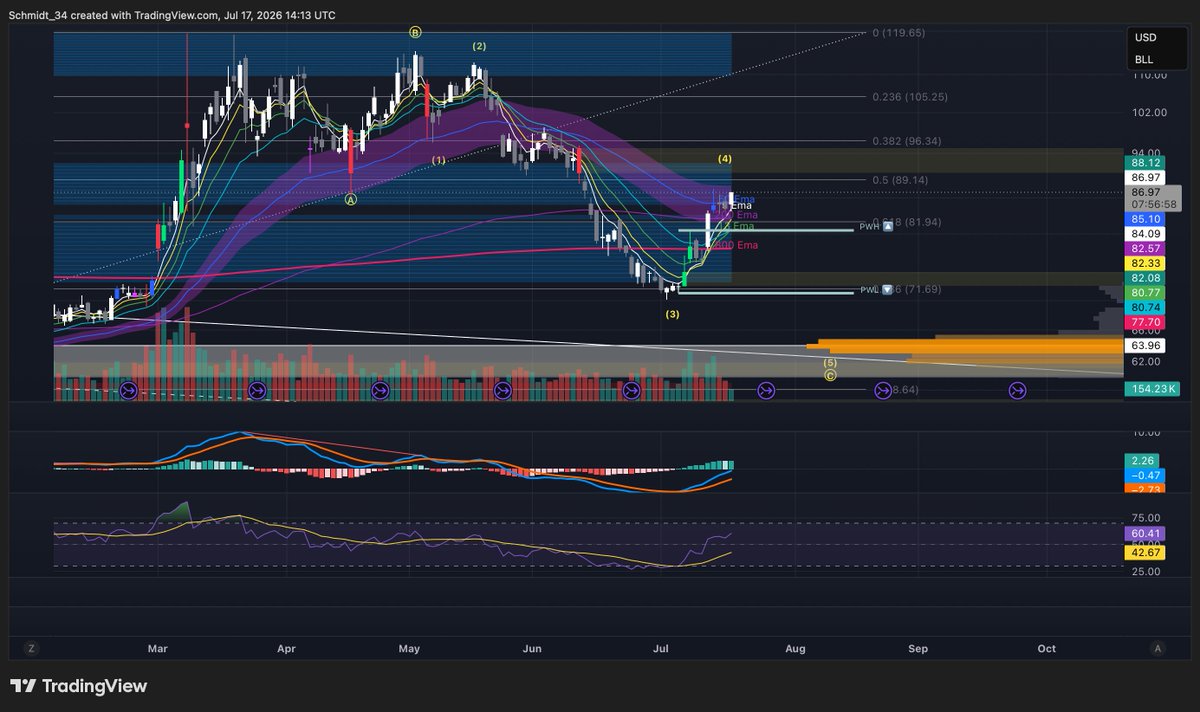
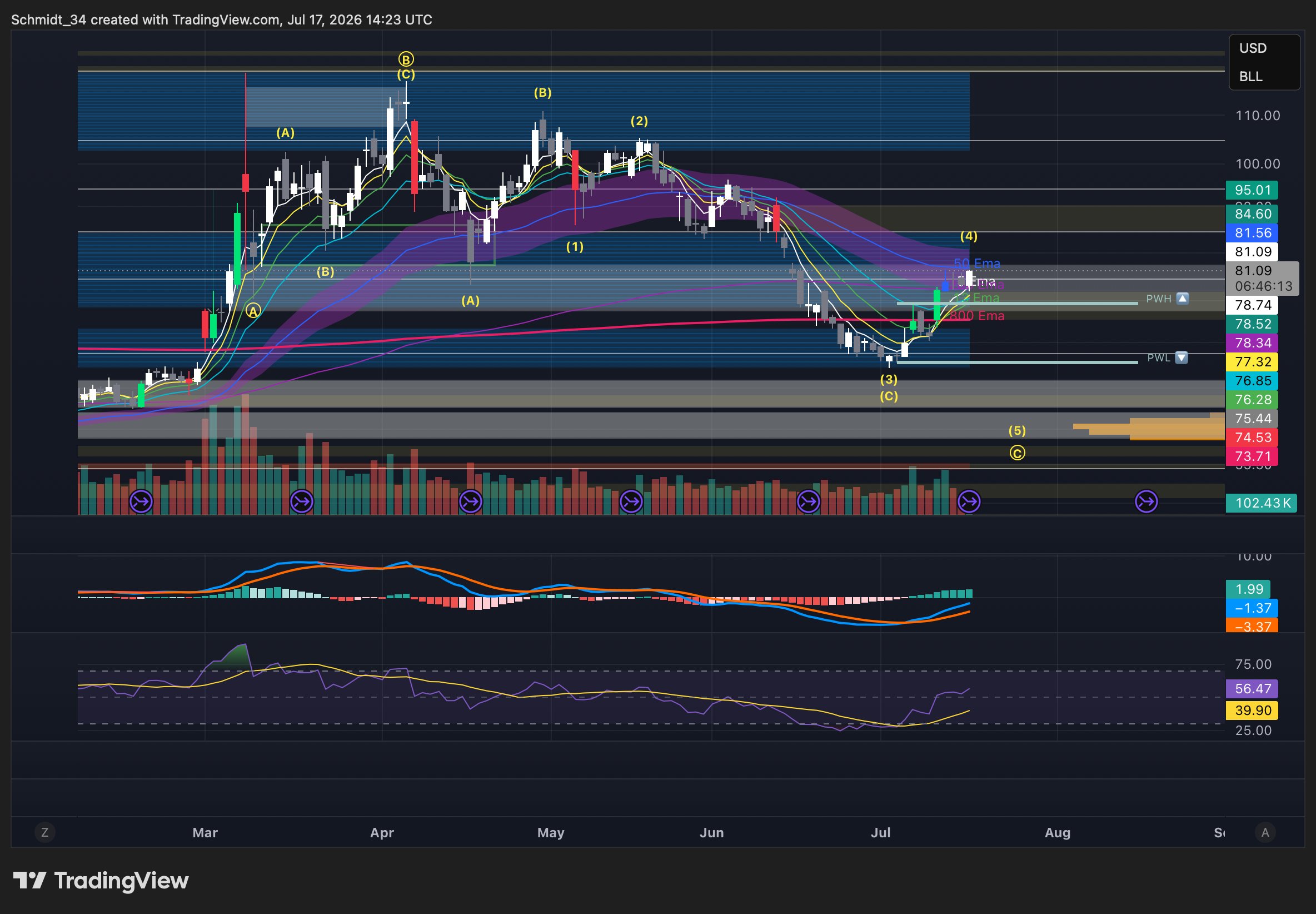
In the wake of the 2026 supply disruptions, the oil market shows a clear divergence in positioning and incentives. China holds by far the largest reserves and can afford to wait for more attractive price levels before large-scale replenishment. The US SPR has relied on exchange mechanisms rather than outright spot purchases. Refining margins have remained robust even as crude prices have eased, supported by tight product markets.
1. Reserve Positions: A Tale of Two Buffers
China maintains the world’s largest combined strategic and commercial oil inventories estimated at approximately 1.3–1.4 billion barrels (government SPR portion roughly 360–400 million barrels plus substantial commercial and refinery stocks).
China aggressively built inventories through much of 2025.
During the 2026 disruptions, it drew down commercial stocks at roughly 1 million barrels per day while sharply reducing imports, helping preserve its core government SPR.
This provides significant coverage on the order of 85–130 days depending on the consumption/import metric used.
The US SPR, by comparison, has fallen to approximately 316–320 million barrels — its lowest level since 1983 — following releases tied to the supply shock. China’s scale and inclusion of commercial stocks give it materially greater flexibility and endurance than the more limited US government SPR.
2. US SPR Release Mechanics (The Key Nuance)
Recent US releases were executed largely through emergency exchanges/loans rather than permanent sales.
Under this structure:
- Companies borrow SPR crude in the near term to help ease market tightness.
- They are required to return the original volume plus a contractual premium (typically in the 18–26% range) on a scheduled basis, often extending into 2026–2028.
- This approach delivers immediate supply while embedding future replenishment at no net cash cost to the government for the premium barrels.
- It hints at the absence of large scale open market buybacks even as prices have eased.
3. Refining Margins Remain Attractive as Crude Eases
Refining profitability, measured by crack spreads (the difference between crude feedstock costs and refined product prices), has been notably strong in recent periods often in the range of several tens of dollars per barrel, well above longer-term historical averages.
This strength has persisted even as crude prices have moved lower. The primary driver is on the product side:
- Tight global inventories of gasoline, diesel, and jet fuel.
- Resilient demand.
- Constraints in global refining capacity and logistics.
- Strong export flows from efficient complex refineries (particularly on the US Gulf Coast).
Nuance: Refiners benefit from lower crude input costs while product prices have remained supported by these demand and supply dynamics. This creates a favorable environment for refining margins even at lower crude price levels. Upstream breakeven levels vary significantly by basin and operator (existing production generally has lower cash costs than new drilling), but the refining sector’s economics have been decoupled from upstream pressures in the current setup.
4. Strategic Implications
China is positioned as a classic swing buyer. With its large inventory cushion, it has been able to reduce imports and draw commercial stocks during higher-price periods. The mid-50s to low-60s range represents a zone where restocking economics become increasingly attractive for reserve rebuilding.
US SPR loan/exchange mechanics have provided a bridge for the market while setting up future inflows through contractual repayments.
Refiners have an incentive to maintain high utilization when crack spreads are wide, which helps absorb available crude and supports overall market balance.
The combination points to short-term softness from reduced Chinese buying and inventory draws, with potential medium-term support from replenishment activity by both China and (via scheduled repayments) the US SPR system all within a backdrop of resilient product markets.
This setup highlights how different players optimize for their specific constraints and objectives: energy security and opportunistic buying for China, operational bridging for the US SPR, and margin capture for refiners. The mid-50s to low-60s zone is noteworthy as an area of growing interest for reserve rebuilding while refining margins remain supported by product market dynamics. This range sits within a broader context where replenishment activity from multiple sources could gain traction as conditions evolve.
As always educational not advice.
Looking at the higher timeframes, my primary target of $120 hit perfectly, and $150 was firmly on my cards. However, I believe the execution window for that hyper-bullish scenario is rapidly shrinking due to a heavily shifting political landscape. With the Trump administration hyper-focused on inflation and retail gas prices ahead of the midterm elections, there is coordinated political pressure to force energy costs down. Treasury Secretary Scott Bessent explicitly validated this directive on Fox News.
The Binary Wildcard
This engineered bearish baseline remains entirely data and macro-dependent. My thesis assumes no further structural degradation to global supply lines. Should aggressive, unresolvable chokepoint pressures materialise at the Bab al-Mandab Strait or other key corridors, the geopolitical risk premium will gap higher instantly as I have seen locally, shifting market mechanics back to the bulls and bringing those structural bullish targets right back into play.
My Bottom Line: I am personally tracking the current structural weakness and the potential for a failed EMA retest, while keeping my eyes glued to the straits for any sudden shifts in data.